


C Profile
Flat steel Steel / Sheet metal Products
Tube & Box Profiles
Rolled Profile Group
Renewable Energy Solutions
IMG Investment
C Profile
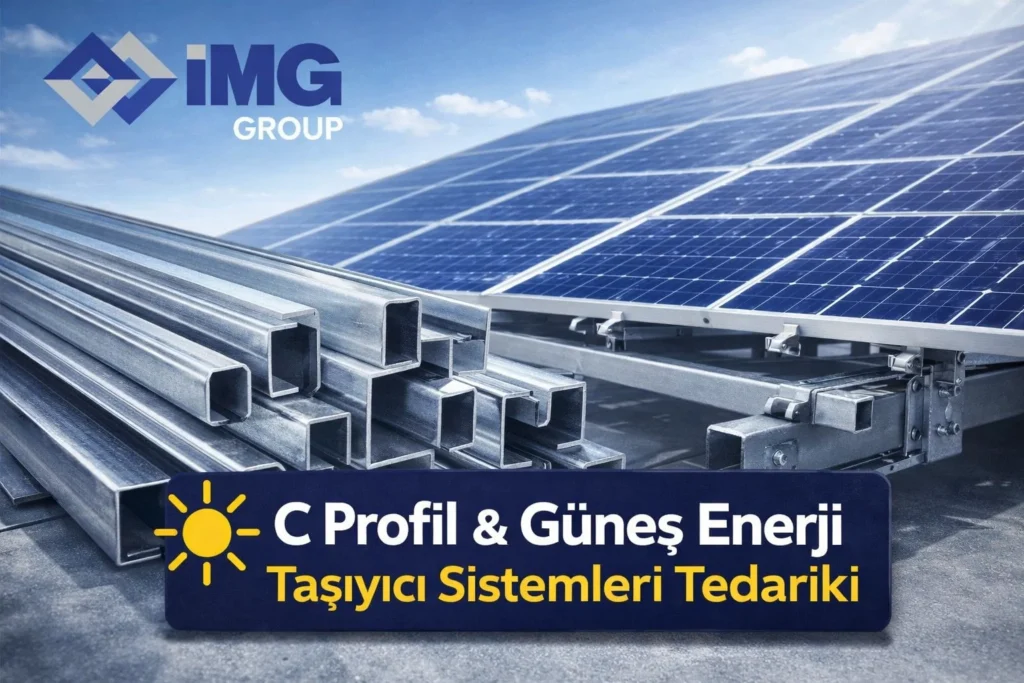
The selection of a mounting system in solar energy projects is of critical importance for the long-term, safe, and efficient operation of the power plant. In this regard, the C-Profile is one of the most widely preferred mounting profile solutions for both ground-mounted and rooftop solar power plants (SPP). Thanks to its suitable cross-sectional geometry, ease of installation, and compatibility with various material combinations, the C-Profile offers flexible solutions tailored to project requirements.
IMG Group, with a network of manufacturing partners spanning over 30 years, ensures the supply of C-profiles and support structure systems used in solar power plants in accordance with project specifications and coordinates the entire process. This structure ensures manufacturer matching in accordance with design criteria, coating options compliant with standards, and on-time delivery.
The Role of C-Profiles in Solar Energy Projects
The C-profile, with its square or rectangular cross-section, cold-formed construction, and hollow design, offers a balanced performance between weight and load-bearing capacity. This feature not only speeds up installation but also enhances the overall rigidity of the system, particularly in solar mounting systems. In ground-mounted and rooftop applications, it enables high load-bearing performance with fewer components.
At this point, the advantages offered by the C-Profile are not limited to structural strength alone. Its compatibility with standard panels, clamps, and cable management accessories also facilitates system integration. This ensures controlled progress in the project process from both a technical and logistical standpoint.
The Use of C-Channels in Ground-Mounted Solar Power Plant Support Structures
In ground-mounted solar power plants, C-profile sections are widely used as primary and secondary structural members. Different ground conditions and panel layout scenarios necessitate the selection of the appropriate profile cross-section and material. For this reason, the procurement process involves not only selecting the product but also matching it with a solution tailored to the project’s specific requirements.
In this context, the land type systems used primarily configurations are as follows:
Single or double row panel arrangements
Fixed-tilt or tracker-compatible systems
Hammer-driven piles, screw piles, or structures with concrete footings
For each of these configurations, steel C-channels, aluminum profiles, or steel-aluminum hybrid solutions may be selected. When making this selection, ground conditions, wind and snow loads, and logistical constraints are all taken into account. This ensures the design of a durable structural system that is well-suited to outdoor environmental conditions.
Roof Type Solar Power Plant Systems C Profile Advantages
The selection of C-channels for roofing applications depends on the building’s load-bearing capacity and the type of roof. Trapezoidal sheet metal, sandwich panels, standing seam roofs, and reinforced concrete roofs each require different fastening and support solutions. For this reason, C-channels offer a significant advantage in solar power plant projects due to both their lightweight nature and their cross-sectional efficiency.
Roof type applications preferred C-Profile solutions are shaped according to the following criteria:
All aluminum, all steel, or hybrid combinations.
Panel placement suited to the roof orientation, slope, and shading conditions
Fixed or adjustable tilt solutions
This approach ensures a balanced load distribution and helps maintain the roof’s waterproofing integrity. When combined with appropriate fasteners and systems featuring EPDM gaskets, the result is a structure with high corrosion resistance and a long service life.
Engineering Criteria and Compliance with Standards
Engineering criteria and standards are the primary determining factors in the supply of C-profiles. Wind, snow, and seismic loads are evaluated based on regional maps and project data. The profile cross-section and coating type are determined accordingly.
For corrosion protection, options such as hot-dip galvanizing (EN ISO 1461 / ASTM A123), zinc-magnesium-coated sheet metal, electro-galvanized steel, or painted solutions may be selected. Material grades include structural steel (S235–S355 range) and 6xxx series aluminum profiles. Throughout this process, coordination of manufacturer-issued certificates, coating reports, and quality documentation is ensured.
C-Profile Product Features and Benefits
The technical advantages offered by C-profile directly impact the total cost of ownership in solar energy projects. With the right choice of materials and coatings, maintenance requirements are reduced while the service life is extended. Thanks to the available hole and slot options, installation time is reduced and on-site labor efficiency is improved.
These features make the C-Profile the preferred choice as a reliable support solution for both ground-mounted and rooftop solar power plant applications.
The Advantage of a Single Point of Contact for Procurement and Project Coordination
IMG Group adopts a manufacturer-independent approach to the supply of C-profile and solar mounting systems. The entire process—from receiving technical briefs to matching manufacturers, and from preparing quotes and scheduling delivery timelines to quality documentation—is coordinated under one roof. A transparent and controlled structure is also provided during the shipping and post-sales support phases.
This comprehensive approach ensures that projects proceed on schedule and in compliance with standards. In C-profile-based solar mounting systems, the right product, the right manufacturer, and effective coordination all come together under one roof.