


Blog
What Is a Galvanised Steel Sheet? Comprehensive Guide – 2026

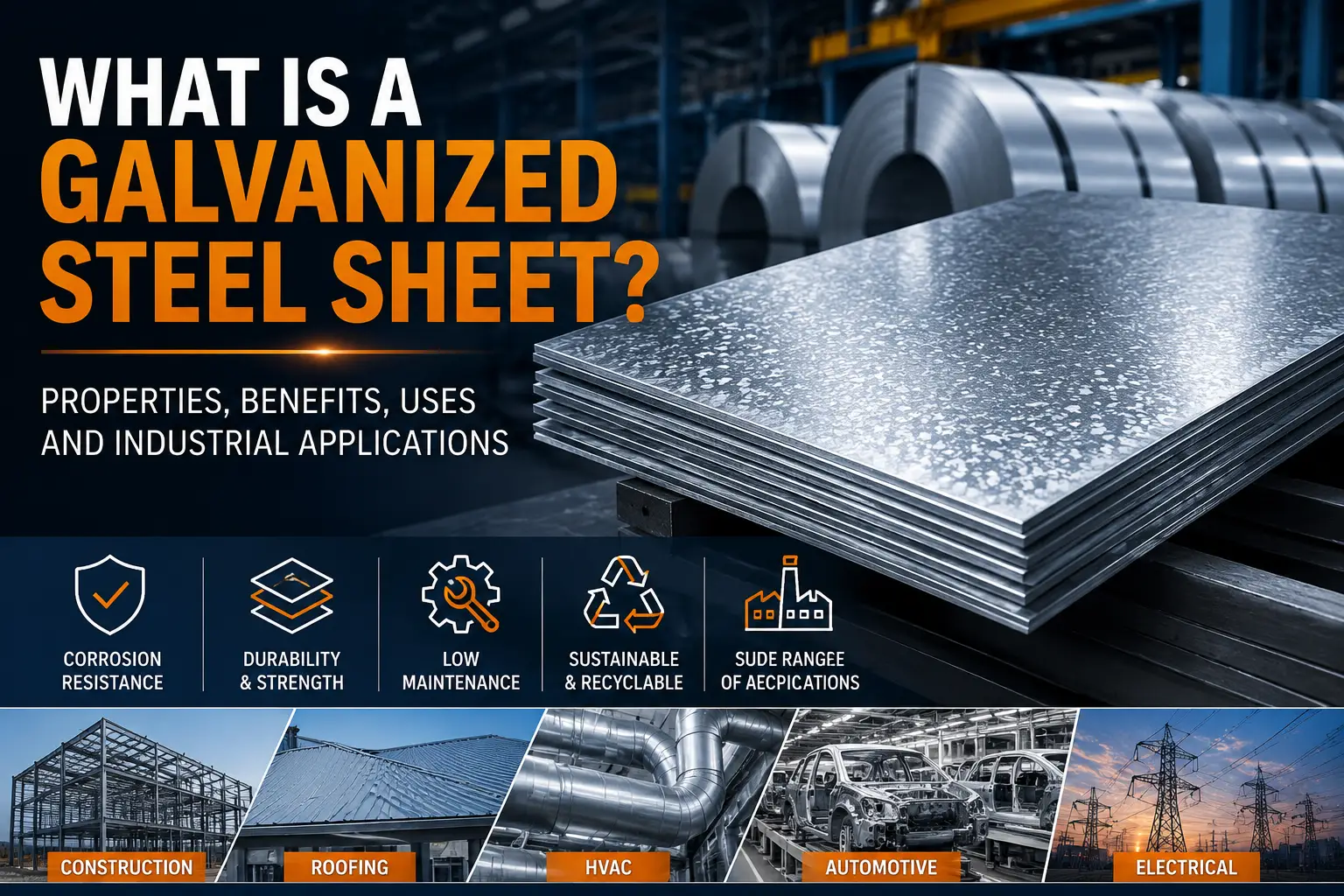
Steel is one of the most common material used in construction and manufacturing around the world. It is an important part of industries from construction and infrastructure to renewable energy and industrial manufacturing due to its strength, versatility and cost-effectiveness. One of the biggest challenges steel faces, however, is its susceptibility to corrosion when exposed to moisture, oxygen and harsh environmental conditions.
Over the years, several protective coating technologies have been developed to meet this problem. Galvanised steel especially is still one of the most popular and trusted solutions for corrosion protection. Galvanised steel sheets have a coating of zinc on the surface of the steel which increases their resistance to rust and environmental degradation, thereby extending the life of components and structures used in harsh outdoor environments.
Galvanised steel sheets are being used today in a wide variety of applications. They are used extensively in industrial buildings, agricultural facilities, infrastructure projects, steel fabrication and renewable energy systems. Cost efficient and providing long term corrosion protection they are a preferred choice for engineers, contractors and manufacturers all over the world.
The increasing demand for durable, low maintenance materials has also brought the importance of galvanised steel to the fore, particularly in industries such as solar energy, where structures are designed to be in place for several decades. Galvanised steel continues to have an important role in modern construction and industrial applications, as project owners focus more on life cycle value and long-term performance.
This article will explore what galvanised steel sheet is, how it is made, how zinc coatings protect steel from corrosion and why galvanised steel is still one of the most popular materials in a lot of industries.
How Is Galvanised Steel Sheet Produced?
Corrosion resistance of galvanised steel starts at the point of manufacture. While steel itself contains the strength needed for structural and industrial purposes, it’s the zinc coating applied during galvanisation that helps with protecting the material against environmental exposure and corrosion over time.
Galvanised steel sheets are made by coating the surface of steel with a protective layer of zinc. This coating acts as a barrier between the steel substrate and the external elements such as moisture, oxygen and airborne contaminants. Depending on the production method , the coating can also provide sacrificial protection . This means that in case of surface damage , the coating protects exposed areas .
There are various methods of galvanising used in the steel industry. The most common method used for steel sheets is the continuous hot-dip galvanising process.
Hot-Dip Galvanizing Process
The hot dip galvanising process starts with the steel coils going through a series of cleaning and preparation steps. Any oils, dirt, scale or surface contaminants must be removed for proper coating adhesion
After cleaning, the steel is passed through a molten zinc bath, which coats the surface. As the steel leaves the bath a controlled layer of zinc is bonded to the material.
The result is a steel sheet with the mechanical properties of steel and the corrosion protection properties of zinc.
Continuous Galvanizing Production
The production of galvanised steel sheets is typically carried out on continuous galvanising lines today.
In this process steel coils pass continuously through:
- Stages of surface cleaning
- Annealing sections
- No suggestions
- molten zinc baths
- Cooling zones
- Surface finishing processes
The manufacturers can produce large volumes of galvanised steel for industrial applications efficiently and with consistent coating quality using this method of production.
Zinc Coating Formation
One of the most critical aspects of galvanisation is the bond between the zinc and the steel substrate .
The zinc coating does not just sit on the surface like paint – it is metallurgically bonded to the steel. This strong bond helps the coating last longer and helps keep the protection there for the life of the product.
Coating thickness can vary depending on project requirements, environmental conditions and industry standards.
Surface Characteristics
Galvanised steel sheets are generally bright metallic in appearance and have a uniform surface finish. The coating specs could change , as could the manufacturing process . The surface may be different , but the primary function of the coating is the same : to shield the steel underneath from corrosion .
The quality of the coating will directly affect the long term performance. That’s why manufacturers use rigorous quality control practices to check coating thickness, adhesion and surface consistency before shipping products to customers.
To see why galvanised steel works so well for outdoor projects, you need to understand the process of making it. Next, let’s consider the protection mechanisms that enable zinc coatings to protect steel from corrosion for many years.
How Does Galvanised Steel Protect Against Corrosion?
The primary reason for galvanising is to protect steel from corrosion and prolong its service life in outdoor and severe environments. Steel is strong and versatile, but is inherently prone to rust when exposed to moisture and oxygen . The zinc coating applied in the galvanising process creates a protective layer that helps to prevent this deterioration.
The beauty of galvanised steel is that it has many protection mechanisms instead of one barrier. These mechanisms, acting together, help to reduce the risks of corrosion and maintain the integrity of steel structures over time.
Barrier Protection
The first defence is the zinc coating itself.
The coating offers a physical barrier between the steel surface and environmental factors such as:
- Moisture
- Oxygen
- Rainfall
- Moisture
- Pollutants in the atmosphere
This barrier, when intact, prevents direct exposure of the underlying steel to corrosive conditions.
One of the main reasons galvanised steel is so good for outdoor applications and structural projects is this protective layer.
Sacrificial Protection
One of the special advantages of galvanised steel is sacrificial protection.
Compared to steel, many coating systems are not as reactive. If scratched or damaged, the zinc around the exposed area will corrode first, helping to protect the underlying steel.
This process greatly reduces the possibility of rust forming at the localised damage points and contributes to the long-term durability of galvanised components.
Formation of a Protective Zinc Layer
Zinc reacts naturally with the atmosphere and in time builds up stable protective compounds on its surface.
These layers help to slow down further corrosion and improve the long term performance of the coating. This natural protection mechanism is one of the reasons galvanised steel can provide reliable service in a wide variety of environments.
Long-Term Corrosion Resistance
The galvanised steel offers reliable corrosion protection throughout the life of the product by means of barrier protection and sacrificial protection.
This makes galvanised steel a popular option for:
- Building projects
- Industrial installations
- Outbuildings
- Infrastructure improvements
- Solar mounting systems where long term exposure to outdoor conditions is expected.
Engineers, project developers and manufacturers are not only concerned with durability. Corrosion resistance is also an economic factor. Reduced maintenance requirements and longer service life can lead to improved lifecycle value and reduced operational costs.
These benefits are just a few reasons that galvanised steel continues to be one of the most specified steel products in the world. Understanding these benefits in more detail helps explain why galvanised steel continues to be used in so many industries and applications.
Key Benefits of Galvanised Steel Sheets
The practical benefits it provides are the main reasons for the widespread use of galvanised steel across the construction, infrastructure and industrial sectors. Galvanised steel sheets are a mixture of steel strength and zinc protection. Galvanised steel sheets offer a great solution for projects needing long-term durability and corrosion resistance.
For engineers, contractors and project owners, material selection is about much more than structural performance — it’s about maintenance requirements, lifecycle costs and overall project value. For many applications, galvanised steel offers a good mix of these elements.
Corrosion Resistance
One of the greatest advantages of galvanised steel is that it resists corrosion when used outdoors or in other exposed environments.
The zinc coating helps to protect the steel substrate from moisture, oxygen and other environmental elements that contribute to rust formation. This protection can greatly increase the life span of steel components compared to non-coated steel products.
Therefore, galvanised steel is often chosen for applications where it will be exposed to the elements over the long term.
Long Service Life
Steel degradation is largely due to corrosion, and steel can be protected efficiently to extend its service life substantially.
Properly selected for the intended environment, galvanised steel will provide many years of service with little degradation in performance. It is long-term durable and is an attractive choice for infrastructure, industrial facilities and renewable energy projects.
The longer the service life for asset owners, the lower the replacement costs and better the investment value.
Low Maintenance Requirements
Maintenance costs can represent a large part of the total life-cycle cost of a structure.
The zinc coating will always be protecting the steel beneath . So galvanised steel needs less maintenance . Galvanised steel can often provide reliable performance with relatively little maintenance intervention, unlike some protective systems that require frequent inspection, repair or recoating.
This benefit is especially relevant for large scale projects, where maintenance activities may be complex and costly.
Cost Efficiency
Galvanised steel is often considered to be a low cost corrosion protection solution.
Material costs will depend on coating specifications and project requirements but durability and lower maintenance costs often add up to strong value over the long-term.
Project teams are increasingly evaluating materials not only on the basis of their procurement cost but also on the basis of total ownership cost over the life of the structure. In this regard, galvanised steel performs well in many applications.
Sustainability Benefits
Modern construction and industrial projects are increasingly having sustainability considerations.
Durable materials help save resources by reducing the frequency of replacements and increasing the lifespan of an asset. Additionally, steel is one of the most recycled materials on earth, promoting circular economy principles in numerous industries.
Galvanised steel can help structures stay in service longer, leading to more sustainable project outcomes.
These benefits are the reasons why galvanised steel still is a preferred material in many industries. To gain a better understanding of its versatility, it is useful to look at the industries and applications where galvanised steel sheets are most commonly used today.
Common Applications of Galvanised Steel Sheets
Galvanised steel is one of the most commonly used materials across many industries thanks to its corrosion resistance, durability and cost efficiency. Galvanised steel sheets play an important role in many applications, from construction and infrastructure to agriculture and renewable energy, where long-term performance is critical.
Environmental exposure can be a significant factor in the life of steel components . Thus, many project developers and manufacturers choose galvanised steel as a practical solution to reduce the risk of corrosion and maintenance.
Construction Industry
Products made from galvanised steel remain among the most popular in the construction market.
Typical applications of Galvanised steel sheets:
- Roof systems
- Panelling
- Structural elements
- Facade system
- Steel framing applications.
They can endure outdoor conditions while still performing structurally, making them a dependable choice for both residential and commercial projects.
Industrial Facilities
Corrosion can be accelerated by moisture, airborne particles, temperature fluctuations and other conditions in the harsh environments typical of industrial facilities.
Galvanised steel is a popular material used in warehouses, factories, logistics centers, and manufacturing plants, as it adds durability and minimises the need for long-term maintenance.
Corrosion protection is a major consideration when selecting materials for many industrial projects.
Infrastructure Projects
Typically infrastructure assets are anticipated to remain in service for many decades.
Many bridges, transportation facilities, utility structures and public infrastructure projects require materials that can withstand constant exposure to the elements. Galvanised steel meets these requirements by providing long-lasting corrosion protection and reliable structural performance.
Its strength makes it a heavily specified material for projects where maintenance access could be limited or costly.
Agricultural Structures
In agricultural environments, steel materials can be especially challenging.
Moisture, fertilisers, livestock operations and changing weather conditions can create highly corrosive conditions that accelerate the process of deterioration. So, galvanised steel is found in a lot of:
- Glasshouses,
- Livestock operations
- Farm buildings for storage
- Irrigation facilities;
- Farm infrastructure
The zinc protective coating helps to extend the life of structures operating in these demanding environments.
Renewable Energy Projects
As renewable energy development continues to grow around the world, galvanised steel has emerged as a key material for many energy-related applications.
Its corrosion resistance and structural reliability makes it suitable for :
- Solar energy mountain systems
- Ground-based solar farms
- Energy infrastructure projects
- Structures for outdoor use
Material durability can impact the overall project performance, as renewable energy assets are often expected to operate for 25 years or more.
Steel Fabrication and Manufacturing
Galvanised steel sheets are also widely used in the fabrication and manufacturing industries.
They can be manufactured into a variety of products and components for construction, transportation, industrial equipment and infrastructure systems. They are versatile and enable manufacturers to combine corrosion protection with the mechanical properties needed for demanding applications.
Its breadth of application proves why galvanised steel remains one of the steel industry’s most trusted corrosion protection solutions. For modern solar power projects, galvanised steel is particularly important, and renewable energy has become one of the fastest-growing demand areas of these sectors.
Galvanised Steel in Solar Projects
The rapid growth of the solar energy has increased the need for robust construction materials capable of performing reliably in outdoor conditions for decades. The steel structures supporting the solar panels are just as important for the long-term success of a solar power plant as the solar panels themselves.
Solar mounting systems are constantly exposed to environmental conditions such as rain, humidity, temperature changes, UV radiation and airborne contaminants. If structural components are not adequately protected, these factors can lead to corrosion over time. Therefore, resistance to corrosion is an important factor in material selection for solar projects.
Galvanised steel is one of the most common materials used in solar mounting systems, because it offers both structural strength and a proven method of corrosion protection.
Solar Mounting Systems
A structural framework that supports the solar panels and safely transmits the loads to the foundation system is a fundamental component of every ground-mounted solar project.
These structures contain usually:
- Supporting posts
- Beam
- Construction systems
- Connecting parts
- Elements of the foundation
The components are exposed during the whole operational life of the project, so long-term corrosion protection is required.
Galvanised steel delivers that protection while retaining the structural performance required for utility-scale installations.
Ground-Mounted Solar Farms
Photovoltaic projects that are ground-mounted are typically large in area and involve thousands of steel components.
If there are corrosion-related problems on such projects, maintenance can be costly and time-consuming. Consequently, project developers are now looking at material choice in terms of both initial cost and durability.
Galvanised steel is still a popular choice because it provides a functional balance between:
- Corrosion Resistant
- Reliability of structures
- Economical
- Service life expectations
Its properties make it ideal for a wide variety of solar applications around the world.
Outdoor Structural Components
Solar facilities are often located in environments where steel structures are exposed to:
- Rain
- Moisture
- Changes in the temperature
- Wind-borne particles
- Industrial pollution
The risk of corrosion can be quite different depending on the location of the project. Specifying the right materials with enough corrosion protection can help reduce degradation and help long-term asset performance.
Galvanised steel has a long history of successful use in outdoor structural applications and is a trusted option for many renewable energy developments.
Why Corrosion Protection Matters in PV Projects
Today, solar farms are typically designed to last for more than 25 years.
Structural elements need to remain intact throughout this time and require the least amount of maintenance. If not properly addressed in the design stage, corrosion damage can lead to higher costs for inspection and repair and potential performance issues.
Corrosion protection therefore should be regarded not only as a material property, but also as an important part of the overall project risk management.
Galvanised steel’s widespread use in solar projects is a testament to its ability to provide on long-term durability goals while also helping project stakeholders manage lifecycle costs.
Galvanised steel, however, is not the only corrosion protection option available today. Advanced coating technologies have also been developed in recent years, providing engineers and project developers with new options to consider when selecting materials for demanding environments.
Galvanised Steel vs Other Coating Solutions
Galvanised steel is one of the most popular corrosion protection solutions in the steel industry, but there are other options. Engineers and project developers often compare different coating systems when making a material selection decision as project requirements become more demanding and expectations for service life increase.
The best solution will depend on the environment, maintenance strategy, project duration and budget, for example. Knowing the advantages and disadvantages of each of the coating technologies helps you to make sure that you choose the materials that will meet the specific requirements of each application.
Galvanised Steel vs Magnelis
Galvanised steel and Magnelis are both designed to protect steel from corrosion, but with different coating technologies.
Galvanised steel is coated with zinc for barrier and sacrificial protection. This technology has been successfully implemented in construction, infrastructure and industrial uses for many years.
Magnelis is a zinc-aluminium-magnesium coating system designed to offer enhanced corrosion performance in challenging environments. The addition of aluminium and magnesium changes the behaviour of the coating and helps to improve protection in some applications.
Both solutions find widespread use in solar projects, industrial facilities and outdoor structures. The right choice depends on project-specific requirements, environmental exposure and lifecycle expectations.
Galvanised Steel vs Painted Steel
The basic principle of painted steel is the application of an organic coating on the steel surface.
Paint systems can provide an attractive appearance and an additional layer of protection, but the performance of those systems is critically dependent on coating quality, surface preparation and ongoing maintenance.
If the painted surface is damaged, corrosion can begin in exposed areas unless additional protection measures are implemented.
Galvanised steel differs in that the zinc coating provides both a physical barrier and sacrificial protection. This characteristic ensures protection even when there is slight damage on the surface.
In many outdoor structural applications, galvanised steel provides a more durable corrosion protection strategy than paint alone.
Galvanised Steel vs Stainless Steel
Stainless steel is another popular option when corrosion resistance is important.
Stainless steel is made of an alloy that makes it resistant to corrosion, with chromium being the main component, unlike galvanised steel. This forms a passive layer of protection that resists corrosion without the need for an external coating.
Stainless steel can offer good corrosion resistance in many environments, but is generally more costly in material cost than galvanised steel.
Therefore project teams often consider:
- Corrosion specifications
- Structural behaviour
- Budgetary constraints
- Lifecycle costs
before deciding between galvanised steel and stainless steel.
Selecting the Right Corrosion Protection Solution
There is no one coating solution that will work for every project.
Each material has its own set of advantages depending on the application, operating environment and long term project goals. So, material selection should be driven by engineering requirements, not by assumptions of what is generally “better.”
The most appropriate choice is dictated by factors such as environmental exposure, expected service life and maintenance strategy.
It is this knowledge of the variables that is key when specifying galvanised steel sheets for a project. In addition to choosing the coating technology itself, engineers must also consider factors such as coating thickness, environmental conditions and durability expectations in order to achieve optimal long-term performance.
Factors to Consider When Selecting Galvanised Steel Sheets
Choosing the right galvanised steel sheet involves more than just choosing a steel thickness or coating type. Each project has its own unique environmental, structural and operational requirements that impact how materials perform over time. A galvanised steel product that performs well in one application may not be the best choice for a different application.
This is why engineers, procurement teams and project developers should take into account a few key factors before specifying galvanised steel sheets for a project.
Environmental Conditions
One of the most important things to consider when selecting galvanised steel is the environment it will be used in.
The rate of corrosion can vary significantly depending on the exposure conditions. Buildings situated in dry interior regions might face comparatively less danger of corrosion, whereas buildings in coastal, very humid or industrial regions could be subjected to more severe situations.
Environmental factors to consider are:
- Humidity concentrations
- Exposure to rainfall
- Salinity contamination
- Pollutants from industry
- Variations in temperature
Understanding the project environment will help assess the level of corrosion protection needed for long-term performance.
Coating Thickness
The life of galvanised steel is directly proportional to the thickness of zinc coating.
Thicker coatings generally provide better protection as there is more zinc to resist corrosion over time. The expected exposure to the environment and the desired service life of the structure determine the right coating specification.
In the determination of coating thickness, project requirements should be weighed against applicable industry standards and engineering recommendations at all times.
Project Lifetime Expectations
Different projects are designed for different periods of operation.
A temporary installation may have very different material requirements than a utility scale solar farm that is expected to last more than 25 years. The coating system for galvanised steel must be matched with the expected service life of the asset.
Long-term projects tend to focus more on durability, maintenance reduction and lifecycle performance rather than the initial material costs alone.
Maintenance Requirements
The maintenance strategy should also be considered in the material selection.
Some projects are easy to get to so you can inspect and repair them, but others are in remote or hard-to-reach environments, making any maintenance activity expensive and disruptive.
In these scenarios, selecting galvanised steel with the correct corrosion protection can help reduce long-term maintenance requirements and improve asset reliability.
Structural and Fabrication Requirements
Selection of material should also take into account fabrication and structural problems.
Engineers might want to consider:
- Formability specifications
- Manufacturing processes
- Welding considerations
- Loading conditions structural
- Details of connection
Aligning material properties with project requirements improves performance and constructability
A Lifecycle-Based Approach to Material Selection
Modern engineering projects are looking at materials from a lifecycle perspective, not just the initial procurement cost.
This approach takes into account:
- Durability of material
- Costs of maintenance
- Expected service life
- Reliability of operations
- Project value over the long term
Balancing those factors allows project teams to make better decisions to select galvanised steel products that not only meet technical, but also economic goals.”
The value of galvanised steel goes far beyond the initial corrosion protection abilities. Its long-term durability and lifecycle performance is one of the key reasons why it continues to be specified on construction, infrastructure and renewable energy projects around the world.
Why Galvanised Steel Sheets Remain a Trusted Choice
Galvanised steel sheets are still important in modern construction, infrastructure, manufacturing and renewable energy projects. The combination of structural strength, corrosion resistance and long-term durability makes them one of the most widely used steel products across a broad range of industries.
The zinc coating used in the galvanisation process provides a dependable barrier against environmental exposure, which helps to reduce corrosion risks and increase the lifespan of steel components. This protection, along with the relatively low maintenance requirements and the strong lifecycle value, has made galvanised steel a preferred material for projects where long-term performance is a priority.
Galvanised steel is a practical alternative for engineers, contractors and project developers looking for reliable corrosion protection for industrial buildings, agricultural facilities, infrastructure developments and utility-scale solar farms. As project owners continue to emphasise durability, operational efficiency and total cost of ownership, galvanised steel continues to demonstrate its value as a proven and cost-effective material.
Selecting the right galvanised steel sheet is not just about price comparison or product specifications. Environmental conditions, project life span, corrosion threats and structural requirements are all considerations for long term performance and cost efficiency. Partnering with an experienced steel supplier can help project teams select the best material solution and avoid costly mistakes during procurement and construction.
IMG Group supplies galvanised steel products for construction, industrial and renewable energy projects across Europe and the Balkans. Whatever the size of your project – a utility-scale solar farm, an industrial facility or a large-scale infrastructure project – our team can help you choose the right steel products for your technical and operational requirements. Contact our specialists to discuss your project and receive tailor-made product recommendations.