


Blog
How to Select the Right Steel Product for Your Project in 2026

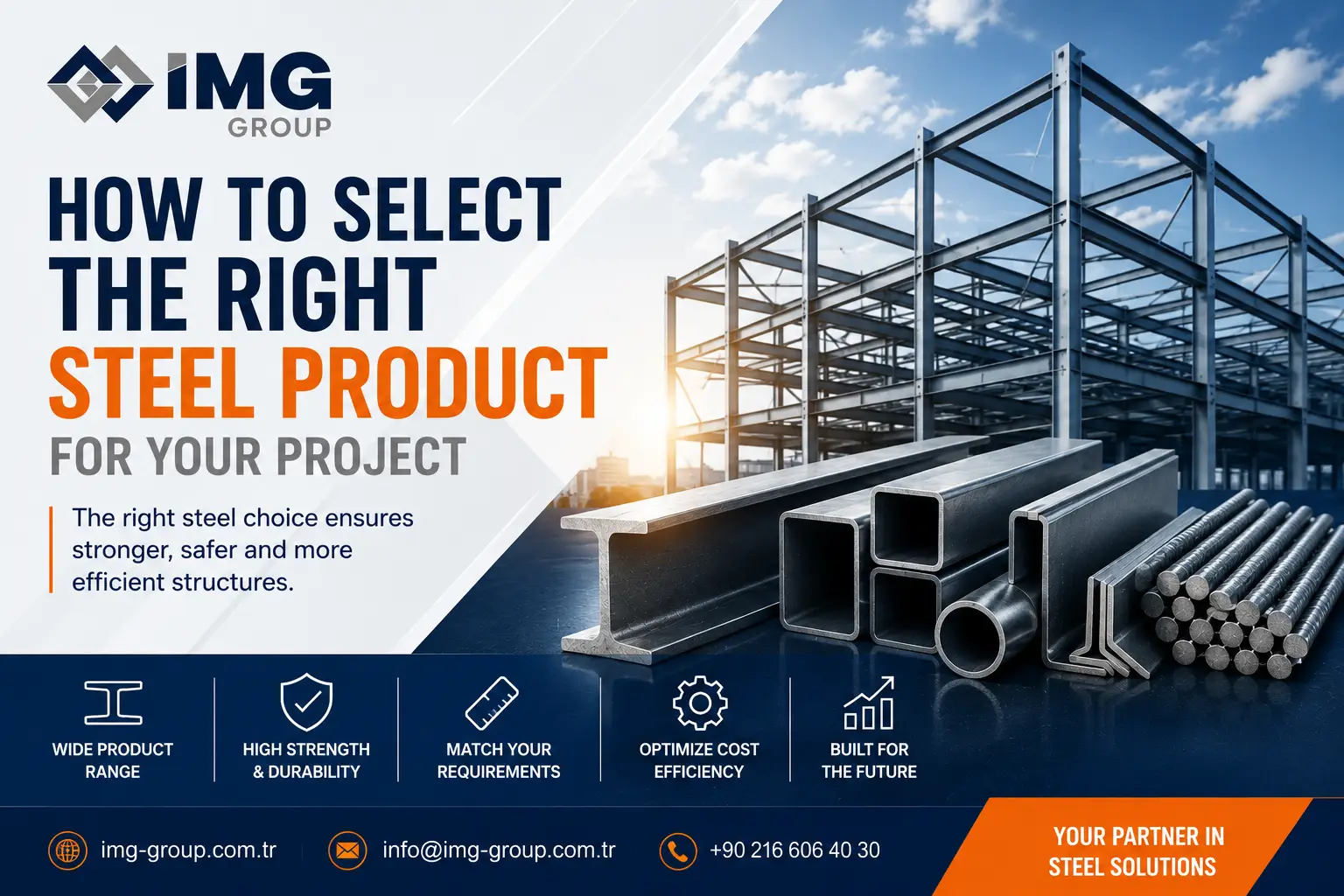
Picking the right steel product isn’t just some box you check off—it’s what can make or break your entire project. Maybe you’re getting ready to put up a skyscraper, start a wind farm, or just lay out the bones of a new warehouse. No matter what you’re building, your call on steel really counts. Sure, it’s tempting to think any steel beam will work, but that’s not how it goes. There’s a lot happening under the surface. You could be staring at two beams the same size, but differences in shape, grade, manufacturing process, or finish can shift everything.
A beam that’s perfect to run sideways across two walls might completely fail as a vertical column, especially outdoors where the weather chews everything up. So, don’t just grab the cheapest option or whatever’s handy. Think through exactly what you need: How much weight does this steel actually carry? How far does it need to bridge? How will it attach to everything else? Is it a hassle to fabricate? Will it face rough weather? What codes do you need to follow? And, maybe most important—how long does it need to last?
Get this right and your building goes up strong, you waste less steel, and you don’t get stuck with big maintenance bills later. But if you get it wrong, you end up with something too heavy, impossible to handle, quick to rust, overpriced—or worst of all, a structure that just doesn’t work the way you need it to.
Start with the Structural Requirements of the Project
First things first—before you even compare different steel products, you need to pin down exactly what your project needs. Steel for a warehouse roof takes on very different stresses than steel for a machine frame or a ground-mounted solar structure. So, the design process starts with figuring out the loads the steel must handle. That means both the permanent weight—like the structure itself and fixed equipment—and everything else that comes and goes: people, machinery, materials, wind, snow, you name it.
And it’s not just the amount of force, but how that force hits. Some parts have to withstand bending, others get squeezed (compression), pulled (tension), twisted (torsion), or even sheared. The length of spans, where your supports and connections go, and how much the structure can flex—all these come into play.
So, instead of asking which steel product is the strongest, it makes more sense to ask which one actually fits the job. That’s how you avoid under-designing (and risking failure) or over-designing and wasting money on extra steel you don’t need.
Choose the Appropriate Steel Product Type
Once you know what the structure has to handle, you can pick out the right steel shape and profile. IPE profiles, for example, make great beams because they handle bending well. That’s why you see them all over floor systems, roofs, factories—anywhere you need a reliable beam.
HEA profiles have wide flanges, but they’re not as heavy as HEB. They offer a nice middle ground if you want strong beams or columns without extra weight. HEB’s heavier flanges and webs are for serious load-bearing—a popular choice for big columns or critical supports.
NPI and NPU profiles have their own strengths, often for framing or secondary supports, and their value really depends on how you’ll use them and which way the forces run through the structure.
Angle bars work great for bracing, framing, and supporting details. You can pick equal or unequal angles to fit whatever connection or force you need to handle.
If your job needs strength in more than one direction, go with square or rectangular hollow sections. Their closed shapes resist twisting and work well as frames or columns, especially in machines or outdoor structures.
Steel tubes are also everywhere—in construction, manufacturing, energy, infrastructure. Just double-check the dimensions, wall thickness, and manufacturing method to make sure they match your project.
Flat products like sheets are another game altogether. Hot-rolled, cold-rolled, galvanized, pickled and oiled—each offers different surface features and manufacturing perks. Choose based on whether you need to bend, weld, paint, or fight off corrosion.
Remember, not all steel products are interchangeable just because it’s all “steel.” Every shape and manufacturing method solves a specific set of challenges.
Consider Steel Grade and Mechanical Properties
Picking the right profile is only step one. The grade of steel matters just as much since it determines things like strength, ductility, and weldability.
You’ll see grades like S235, S275, and S355 across European projects—that number tells you the minimum yield strength for a certain thickness. But always check the exact standard because requirements can change with thickness and specific application.
Yield strength tells you how much stress the steel can take before it starts to deform for good. Tensile strength is the max stress before it actually breaks. Depending on your project, you might also have to think about toughness, elongation, and how well it welds.
Don’t just assume a higher-strength steel automatically means a better structure. Sometimes, using a lighter or higher-strength grade lets you cut weight, but in plenty of projects, other factors—like buckling, how connections are designed, or even just what’s available—end up being more important.
Basically, pick your steel grade as part of the overall design, not just by chasing the biggest numbers.
Evaluate the Project Environment and Corrosion Risk
The environment has a big say in what steel you use. Steel that’s just fine inside a warehouse may need extra armor if it’s going outside. Rain, humidity, salt, pollution, chemicals, temperature swings—they all speed up corrosion, especially near the coast or in industrial zones.
You’ve got options for protection. Hot-dip galvanizing is a classic for outdoor components, since zinc coatings fight rust in a couple of ways. Galvanized sheets are also great if you need corrosion resistance and a handy base for fabrication.
Some jobs call for even tougher coatings. Products like Magnelis® step in when corrosion resistance is critical—think renewable energy setups or outdoor frameworks. Just make sure your coating fits the real environment, plus your expected service life, fabrication steps, and any project rules.
Don’t treat corrosion protection like an afterthought. The environment should help shape your steel selection right from the start.
Consider Fabrication and Installation Requirements
Even if a steel product looks great on paper, it can spell trouble if it’s tricky or expensive to work with. Most steel needs to be cut, drilled, punched, bent, welded, or coated before you install it, so make sure your choice matches your workshop’s capabilities.
Connections matter a lot. Flange and web sizes affect how easy it is to bolt or weld things together. Hollow sections connect differently than open profiles. Sheets might need to bend a lot, and cracking the coating isn’t an option.
Don’t forget about getting steel to the site or lifting it into place. Heavy profiles boost strength but cost more to move and install. Sometimes, trimming back the steel saves a lot in logistics and makes the build go faster.
If your job uses hundreds or thousands of the same part, even small improvements in fabrication or assembly pay off down the line.
Check Standards, Certification, and Traceability
Every steel product needs paperwork to back up its performance, especially for work in Europe. Standards like EN 10025 outline what’s expected for structural steels, and big assemblies might also have to comply with EN 1090. Hollow sections, tubes, coatings—they’ve all got their own standards.
Lay out what you require early: grade, standards, inspection documents, and traceability—like heat or batch numbers. The EN 10204 3.1 certificate is your proof that the specific steel batch meets inspection criteria.
This paperwork isn’t just a formality. On international projects, missing or wrong documentation means the steel might get rejected, even if the material itself looks perfect.
Balance Initial Price with Lifecycle Cost
Cheapest up front doesn’t always mean cheapest overall. Lower-priced steel might bring more expensive fabrication, complex installation, or faster wear and tear. On the flip side, over-specifying—ordering heavier or higher-grade steel than needed—just wastes money on materials and shipping.
Good steel selection looks at the full picture. Weigh purchase price, structural efficiency, fabrication challenges, protection against corrosion, transport, installation, inspection, upkeep, and expected lifespan.
It’s especially critical for projects meant to last decades. Spending a bit more at the start can end up saving money in repairs, replacements, or downtime over the long haul.
The Right Steel Product Is Project-Specific
There’s no one-size-fits-all answer for the best steel product. IPE, HEA, HEB, NPI, NPU, hollow sections, tubes, angles, flats—each fills a different role. The “right” solution fits the structure’s needs, the steel’s grade and geometry, the environment, how it’s built, the standards, and the project’s bottom line—all considered together.
This practical approach means fewer headaches later and keeps the project running smoother for everyone, from engineers and procurement teams to EPC contractors and developers. It also tends to boost material efficiency, speed up construction, and improve long-term results.
IMG Group offers everything from structural profiles and hollow sections to flat steel and galvanized solutions, serving industrial, construction, infrastructure, and renewable energy projects at home and abroad. By matching project design with technical specs and supply details from the start, you make sure you’re getting the right steel—every time.