


Blog
What are Angle Bars? Uses, Sizes and Forms 2026 Complete Guide

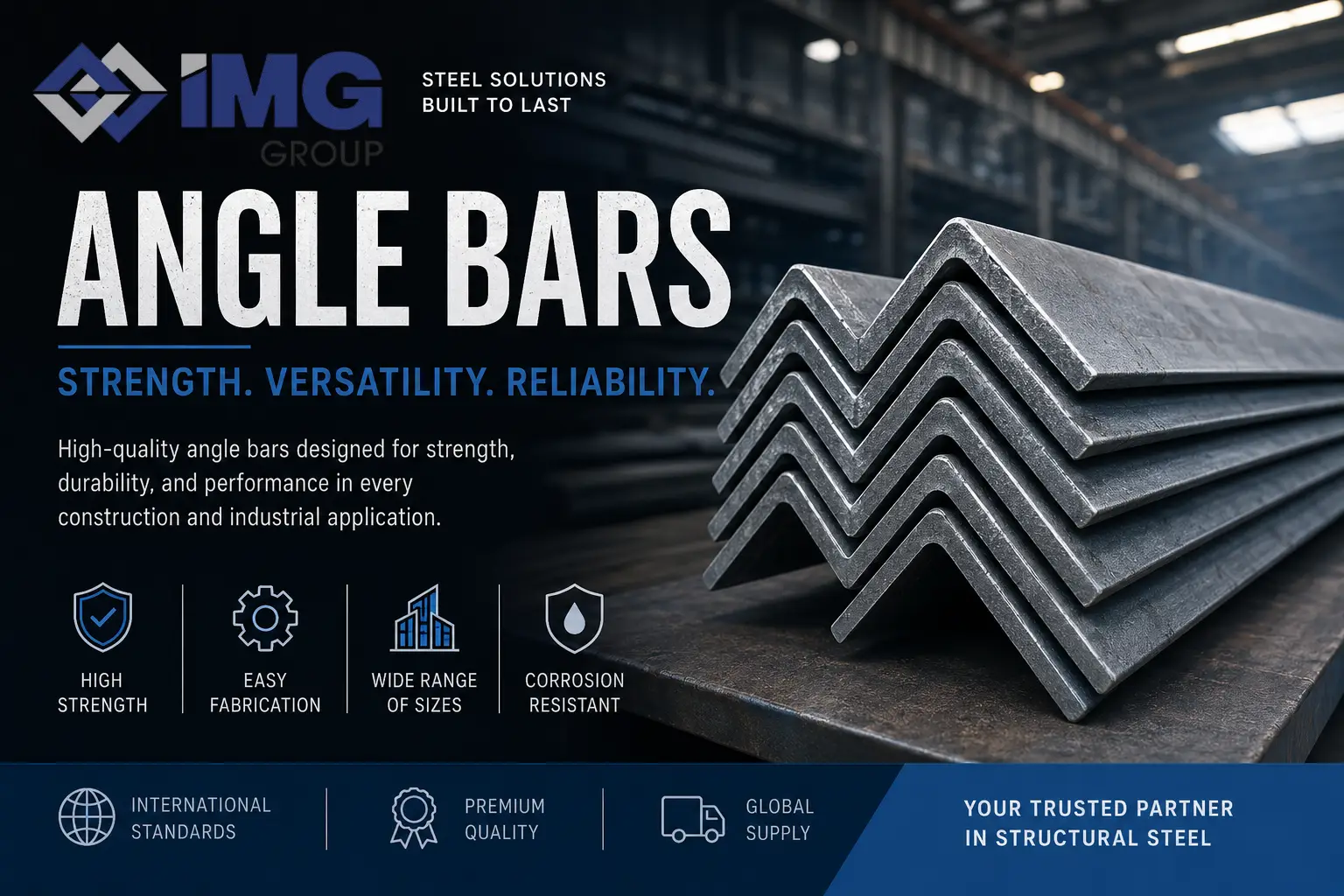
One of the most common structural steel products used in construction, manufacturing and industrial engineering is steel angle bars. These versatile profiles have an L-shaped cross-section, offering dependable strength, stability and support for a variety of structural and fabrication projects. Angle bars play a critical role in the construction of steel structures such as commercial buildings, industrial facilities, renewable energy systems, and infrastructure projects, ensuring durability and cost efficiency.
Steel angle bars are available in a variety of sizes, thicknesses, material grades and surface finishes. They can be customised to meet different load requirements and environmental conditions. Whether it’s for structural framing, equipment supports, bracing systems or custom fabrications, the right angle bar type selection is critical for long-term performance and safety.
In this guide, we will cover what angle bars are, the different types, standard sizes, common materials, key advantages, and industries they are most commonly found in. You will also get to know how to select the right angle bar for your project and the significant things to consider before buying structural steel angles.
What are angle bars?
An angle bar is a type of structural steel bar that is L-shaped with two legs at an angle of 90°. It is one of the most basic products used in the construction of structural steel. It has great strength, is light weight and easy to fabricate. Angle bars are available in many different dimensions, thicknesses and steel grades. They can be produced with equal or unequal leg lengths depending upon the needs of the project.
The steel angle bars are usually hot rolled, but in special cases they may be fabricated from steel plates. Thanks to their simple geometry, they can be welded, bolted, drilled and cut, allowing engineers and fabricators to incorporate them into countless structural and industrial designs.
Angle bars are extremely versatile and can be used in the construction of building frames, steel towers, supports for machinery, bridges, warehouses, renewable energy structures, transportation infrastructure, and custom fabrication projects. They are now an essential component of almost all industries that utilise steel structures as they provide not only structural support but connection support as well.
Angle Steel (Equal)
Equal angle bars are made from two legs of equal length and have a symmetrical L-shaped cross section. Their symmetrical shape promotes uniform distribution of loads making them the best choice for general structural usage including steel frames, columns, roof trusses, support brackets and industrial platforms. Angles are one of the most commonly stocked structural steel sections and are suitable for a wide range of construction and fabrication projects.
Unequal Angle Bars
Unequal angle bars have legs of unequal length, providing additional design flexibility where asymmetrical profiles are required for different load conditions or limited space for installation. They are often used in bridge construction, heavy equipment, gearbox towers and special structural framework applications where engineers require additional stiffness or nonstandard connection arrangements without increasing the total weight of the material.
Why Are Angle Bars So Popular?
Angle steel bars remain one of the most popular structural sections due to their strength, versatility and cost-effectiveness. They are light-weight and easy to transport, easy to fabricate, and compatible with welded or bolted connections. They are also available in a wide range of sizes and steel grades, meaning engineers can choose the most appropriate profile for projects from light fabrication to heavy industrial construction.
Also, angle bars are very sturdy and can be protected with coatings like galvanisation to make them more corrosion-resistant in harsh outdoor and marine environments. They are a reliable solution for modern construction and engineering projects, due to the combination of performance, affordability and adaptability.
Common Types of Angle Bars
All angle bars are identical in shape (L-shape) but are available in a number of types to meet different structural, environmental and fabrication needs. The right fit depends on load capacity, resistance to corrosion, production method, and project requirements. Knowing these differences allows engineers, fabricators and procurement teams to choose the best steel angle for long service life.
Hot Rolled Angle Bars
Hot rolled angle bars are manufactured by rolling heated steel billets into the desired L-shape profile at high temperatures. This yields excellent mechanical strength and dimensional accuracy, and hot rolled angles are the standard choice for structural applications. These find wide usage in commercial buildings, warehouses, bridges, industrial facilities and infrastructure projects requiring high load bearing capacity.
Hot rolled angle bars are made according to the international structural standards and are available in different sizes and grades of steel which are suitable for standard as well as large engineering applications.
Cold Formed Angle Bars
Angle bars are made cold formed by bending steel sheets or strips at ambient temperature. They typically have a smoother surface finish and tighter dimensional tolerances than hot rolled sections. They are often used in light structural work, shelving systems, architectural applications and decorative steel fabrication where appearance and precision are important. Equipment manufacture is also an area of application.
Cold formed angles are good for lighter duty applications, but typically have less structural capacity than hot rolled angle bars.
Galvanized Angle Bars
Galvanised angle bars are coated with a layer of zinc to prevent the steel from rusting. This protective coating can greatly extend the service life under humid, chemical or changing weather conditions. These are used extensively in outdoor construction, solar mounting systems, fencing, telecommunications towers, agricultural structures and marine applications.
Hot-dip galvanising is the most widely used method of protection providing long life against rust with low maintenance costs over the life of the product.
Stainless Steel Angle Bars
Stainless steel angle bars are made from corrosion resistant stainless steel alloys. They are therefore suitable for highly demanding environments. They are widely utilised in food processing facilities, pharmaceutical plants, chemical industries, marine projects and architectural applications where hygiene, resistance to corrosion and aesthetic appearance are of paramount importance.
Stainless steel angles are more expensive than carbon steel alternatives on an upfront basis, but they often provide better long-term value in tough operating environments due to their durability and low maintenance requirements.
Equal vs. Unequal Angle Bars
Angle bars are also classified according to the dimensions of their legs. Equal angle bars consist of two legs of equal length . These are commonly used in general structural construction because of their balanced load distribution . Unequal angle bars have legs of unequal lengths, which offer a high degree of flexibility for custom engineering designs, asymmetric loading conditions and jobs with limited installation space.
The choice of equal or unequal angles is governed by structural calculations, connection details, available space and individual application requirements.
Standard Angle Bar Sizes
Steel angle bars are manufactured in a variety of sizes to meet different structural and fabrication requirements. The right size will depend on things like the amount of load it needs to hold, the length it needs to be, how it connects to other things, and what engineering standards apply. Choosing the correct dimensions is important to the structural integrity, effective use of materials and long term performance.
Most of the structural angle bars are produced in accordance with international standards such as EN 10056, ASTM A36, ASTM A572, or other regional standards. These standards define dimensional tolerances, mechanical properties and manufacturing requirements to ensure consistent quality from project to project.
Common Angle Bar Dimensions
The most frequently used angle bar sizes include:
| Leg Size | Typical Thickness | Common Applications |
|---|---|---|
| 25 × 25 mm | 3–4 mm | Light fabrication, brackets, frames |
| 40 × 40 mm | 4–5 mm | Steel frames, supports, machinery |
| 50 × 50 mm | 5–6 mm | Structural bracing, platforms |
| 65 × 65 mm | 6–8 mm | Commercial construction |
| 75 × 75 mm | 6–8 mm | Industrial buildings, warehouses |
| 90 × 90 mm | 8–10 mm | Heavy-duty structural applications |
| 100 × 100 mm | 8–12 mm | Infrastructure and large steel structures |
For unequal angle bars, common dimensions include:
- 50 × 30 mm
- 75 × 50 mm
- 100 × 75 mm
- 150 × 90 mm
These profiles are selected when structural calculations require different leg lengths for improved load distribution or specific connection details.
Thickness Options
Angle bars are available in various thicknesses depending on the required structural strength. Standard thicknesses generally range from 3 mm to 20 mm, while heavier custom sections are available for specialized engineering projects.
Thicker sections provide:
- Higher load-bearing capacity
- Increased resistance to bending
- Improved structural stability
- Better performance in heavy industrial applications
However, larger thicknesses also increase weight and material costs, making proper engineering selection essential.
Standard Lengths
Steel angle bars are commonly supplied in standard lengths of:
- 6 meters
- 9 meters
- 12 meters
Many suppliers also offer custom cutting services to reduce on-site processing, minimize material waste, and improve installation efficiency.
How to Select the Right Size
Selecting the appropriate angle bar involves more than choosing the largest available profile. Engineers typically consider:
- Design loads and structural calculations
- Steel grade and yield strength
- Span length and connection requirements
- Corrosion exposure
- Applicable building standards
- Fabrication and installation methods
By evaluating these factors together, project teams can select an angle bar that delivers the required strength while maintaining cost efficiency and long-term reliability.
Angle Bar Uses
Steel angle bars are one of the most versatile structural steel products used today. The simple L-shape, high load-bearing capacity and ease of manufacture makes them suitable for many applications in the construction, manufacturing, infrastructure and energy industries. Angle bars are an important part of the strength and stability of many projects and serve as either structural support or connecting pieces.
Constructing & Building Structure
Most of the steel angle bars are used in the construction industry. They are often used in residential, commercial and industrial buildings to strengthen structural frameworks and support a variety of architectural elements.
Commonly used in construction:
- Structural framing
- Roof trusses
- Steel columns and beams
- Floor support systems
- Staircases and handrails
- Building reinforcements
Their combination of strength and cost efficiency makes angle bars an essential component in both new construction and renovation projects.
Industrial Fabrication
Angle bars are extensively used in fabrication workshops and manufacturing facilities due to their ease of cutting, drilling, welding, and machining. Fabricators rely on them to build durable steel structures and custom equipment for a wide range of industries.
Typical fabrication applications include:
- Machine frames
- Equipment supports
- Storage racks
- Industrial platforms
- Conveyor systems
- Protective guards
Their flexibility allows manufacturers to create strong yet economical structural assemblies with minimal processing.
Infrastructure Projects
Large-scale infrastructure developments require structural steel components capable of handling heavy loads and harsh environmental conditions. Angle bars are frequently incorporated into public infrastructure because of their durability and long service life.
Common infrastructure applications include:
- Bridges
- Railway facilities
- Airports
- Port structures
- Utility buildings
- Transmission towers
These projects often require angle bars manufactured according to strict international standards to ensure safety and structural reliability.
Renewable Energy Systems
As renewable energy projects continue to expand globally, steel angle bars have become an important component in solar and energy infrastructure. Their structural strength and compatibility with galvanized coatings make them ideal for outdoor installations exposed to varying weather conditions.
Typical renewable energy applications include:
- Solar mounting structures
- Photovoltaic support systems
- Battery storage platforms
- Cable support frames
- Equipment shelters
Galvanized angle bars are particularly popular in these projects because they offer excellent corrosion resistance and require minimal maintenance throughout their service life.
Agricultural and Commercial Facilities
Angle bars are also widely used in agricultural and commercial buildings where durable steel structures are required at a reasonable cost. Their versatility allows them to support both permanent and modular installations.
Examples include:
- Greenhouses
- Livestock facilities
- Storage warehouses
- Farm equipment shelters
- Commercial storage systems
- Security fencing
Their ability to withstand continuous use and changing environmental conditions makes them a practical solution for agricultural infrastructure.
Transportation and Heavy Engineering
The transportation and heavy engineering sectors utilize angle bars in numerous structural applications where strength, precision, and durability are essential. They are often integrated into fabricated steel assemblies that support mechanical equipment and transportation infrastructure.
Typical applications include:
- Truck and trailer bodies
- Railway equipment
- Heavy machinery frames
- Industrial lifting systems
- Maintenance platforms
- Structural supports for mechanical installations
Thanks to their adaptability and availability in various sizes and grades, steel angle bars continue to serve as one of the most dependable structural sections across modern engineering and industrial projects.
Benefits of Steel Angle Bars
Steel angle bars are still one of the most popular structural steel products, offering a perfect combination of strength, versatility and cost-effectiveness. Engineers and fabricators have the benefit of an easy L-shaped profile to design and build durable structures with reduced manufacturing and installation complexity. These benefits are the reason angle bars are popular for everything from light fabrication to large scale industrial construction.
High Strength-to-Weight Ratio
Angle bars are relatively simple in design but offer great structural strength and keep the overall weight low. This enables engineers to ensure reliable performance of load bearing without adding unnecessary material, helping to reduce transportation and installation costs.
Excellent Structural Flexibility
Angle bars may serve more than one purpose on a single project. They can be used as primary structural members, secondary supports, reinforcement components, connection elements or bracing systems. Their versatility makes them perfect for buildings, bridges, machinery, energy projects and a myriad of custom fabrication applications.
Easy Fabrication and Installation
One of the major advantages of steel angle bars is how easily they can be machined. They are easily cut, drilled, welded, bolted and machined with standard fabrication equipment, allowing contractors to install efficiently and reduce labour time.
Wide Range of Sizes and Materials
Angle bars are made in a wide variety of sizes, thicknesses and steel grades to meet diverse engineering needs. They can also be provided galvanised or in stainless steel for projects that require increased corrosion resistance, giving designers more options for material selection.
Excellent Weldability
Most structural steel angle bars are highly weldable, making them a great choice for shop fabrication and on-site assembly. Strong welded connections help to ensure overall structural stability and also make it easy to integrate angle bars with other steel sections.
Extended Service Life
Angle bars, made of good quality structural steel and properly protected against corrosion, will give years of reliable performance. Galvanised and stainless steel options further increase service life in harsh outdoor, coastal or industrial environments while minimising maintenance requirements.
Cost-Effective Solution
Angle bars are very economical as compared to many other structural steel sections. Their mass production, availability and versatility contribute to reduce the total project costs without compromising the structural performance.
Sustainable and Recyclable
Angle bars are no different than steel, one of the most recyclable construction materials in the world. At the end of their service life they can be recycled and re-used in new steel production with little loss of quality. This encourages sustainable building practices and helps to reduce the environmental impact of infrastructure and industrial projects.
Steel angle bars are still one of the most reliable and economical choices for modern construction and engineering works, due to their structural integrity, ease of manufacturing, durability and cost effectiveness.
How to Choose the Right Angle Bar
Selecting the proper angle bar is not just selecting a larger or thicker section. The ideal profile is dependent upon the structural requirements of the project, the environmental conditions, the methods of fabrication, and applicable engineering standards. The angle bar that works great for one application may not be suitable for another, so it is necessary to evaluate carefully in the planning stage.
First of all, look at the expected structural load. Engineers calculate forces such as compression, tension, bending and dynamic loads to determine the loads that the angle bar must resist. These calculations will inform you of the proper dimensions and thickness of the legs to ensure safety and structural performance over time.
The choice of material is also important. For general construction, mild steel angle bars are a good choice because of their good strength and cost effectiveness. For projects in aggressive environments, however, galvanised or stainless steel may be required to improve corrosion resistance and extend service life. In industrial facilities where higher mechanical strength is demanded, the use of high strength structural steel grades may provide better overall performance.
Environmental factors must not be neglected. Outdoor structures, coastal developments, chemical plants and renewable energy installations are under constant threat from moisture, salt or corrosive substances. In these situations, choosing an angle bar with a suitable protective coating can significantly lower maintenance needs and prolong the life of the structure.
Dimensional accuracy is also an important factor. The selected angle bar shall be compatible with the other structural members, connection details and fabrication processes. Choose dimensions that fit in with the whole design and it will be easier to install and cut down on the waste of materials and fabrication cost.
Finally, buyers should check that the product conforms to widely accepted standards such as EN 10056, ASTM A36 or other project-specific specifications. Consistent mechanical properties, exact dimensions and complete traceability are assured for certified structural steel from a dependable supplier, which are important elements in commercial, industrial and infrastructure projects.
By taking into account structural requirements, physical properties of materials, environmental conditions, and global standards altogether, engineers and procurement specialists can select an angle bar that offers dependable performance and supports the project’s overall efficiency and durability.
Angle Bars vs. Other Structural Steel Sections
Angle bars are among the most versatile structural steel products but they don’t always provide the right solution for every project. Structural engineers design steel sections based on load requirements, connection details, span lengths, and overall design objectives. Knowing how angle bars stack up with respect to other standard profiles is important to ensure that the best and most economical material is selected.
Angle bars are particularly useful where strength, simplicity and ease of fabrication is desired. Thanks to their L shape profile they are a great choice for bracing systems, support frames, connection details and secondary structural members. They are usually lighter than many other structural sections, which may help reduce the complexity of fabrication while achieving reliable performance.
For applications involving long spans or heavy vertical loads, IPE beams and wide flange sections are generally more suitable. Their geometry is specifically designed to resist bending, making them the preferred choice for primary beams, floor systems, and major structural frameworks. These sections are stronger but they are generally more expensive and heavier than angle bars.
Hollow structural sections (HSS) are often specified where torsional resistance and aesthetic appearance are important, such as square and rectangular tubes. Closed profile gives great strength in many directions while providing a clean architectural finish. They are mainly used in columns, building facades, handrails and modern steel structures.
Another option is steel channels when additional rigidity or larger connection surfaces are needed. Their C-shaped profile makes them suitable for equipment supports, machinery bases and structural framing, particularly where loads are applied in one direction .
Flat bars are mainly used as connecting plates, brackets, reinforcement strips and fabricated parts, rather than as primary structural elements. They are very flexible in fabrication, but do not offer the same structural stability as angle bars in applications requiring multidirectional support.
These structural steel products tend to complement each other in the same project rather than compete against each other. For example, a steel building may use IPE beams for the main frame, hollow sections for the columns, channels for secondary framing and angle bars for bracing, supports and connection assemblies. The correct mix of structural sections will increase efficiency, optimise material use and help to create safer and more cost-effective designs.
Conclusion
Steel angle bars are still one of the most practical and widely used structural steel products in construction, manufacturing, infrastructure and energy projects. Their strength, versatility and cost efficiency enable engineers and fabricators to design durable structures without compromising performance or ease of installation. Whether used for structural framing, equipment supports, bracing systems or custom fabrication, angle bars are a go-to choice for projects of any size.
Selecting the right angle bar is more than just choosing the right dimensions. Material grade, corrosion resistance, manufacturing standards and project-specific load requirements all contribute towards long-term reliability and structural safety. Working with certified steel products that comply with international standards also adds to improving quality, consistency and overall project performance.
With the increasing global demand for sustainable and high-performance steel solutions, angle bars continue to be an essential component of modern engineering. They have the versatility and durability to meet a wide range of structural applications—from commercial and industrial buildings to renewable energy and large infrastructure projects.
The IMG Group is capable of providing high quality structural steel products that meet internationally recognised standards, as well as the needs of industries around the world. Whether you are looking for standard or custom dimensions and equal or unequal angle bars, our team can help you source reliable steel solutions that will provide long-term value and dependable performance for your project.